
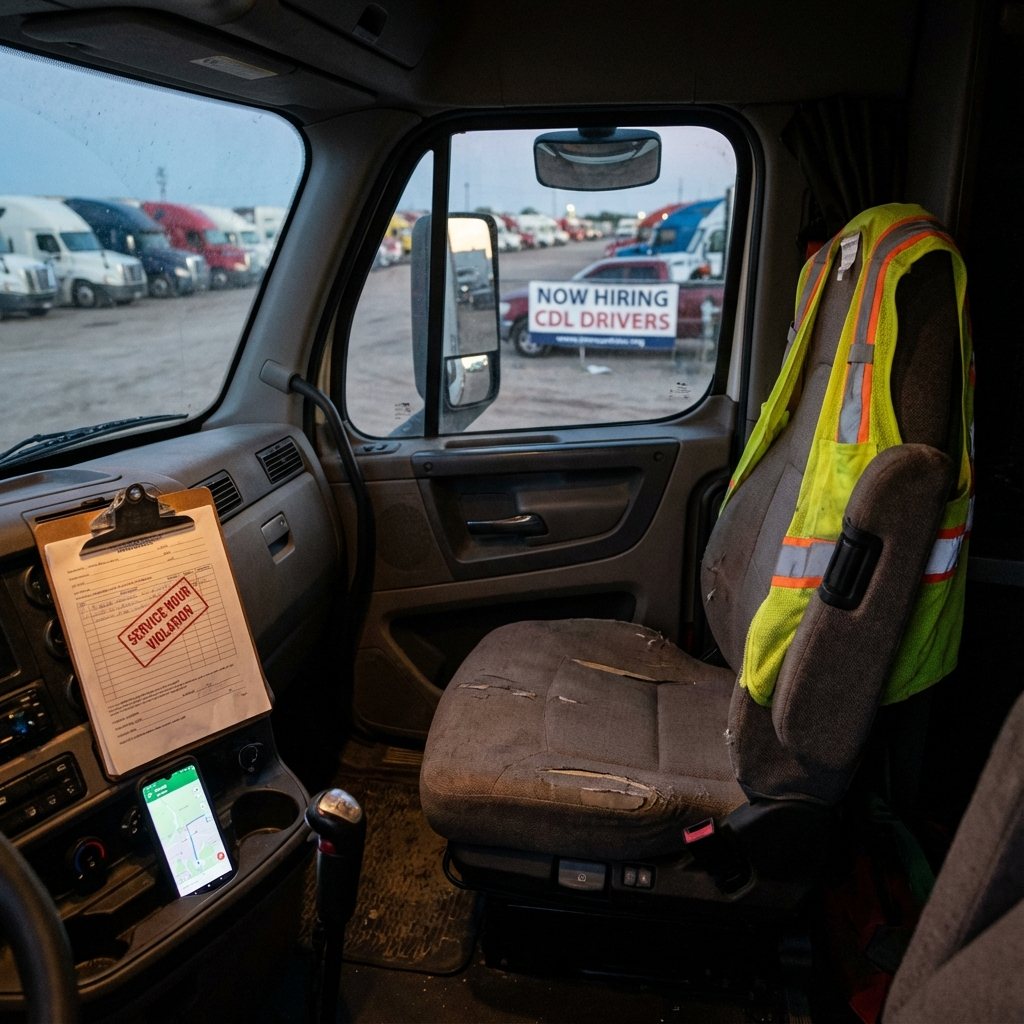
I’ve been tracking something that keeps me up at night.
Between 214,000 and 437,000 commercial drivers are about to disappear from the U.S. supply over the next two to three years. When you add undocumented drivers and new hire restrictions, we’re looking at 600,000 drivers at risk—roughly 16% of the active driver population.
This isn’t a labor shortage. This is a regulatory earthquake.
The cause? Recent changes in U.S. immigration policy and enforcement around non-domiciled Commercial Driver’s Licenses (CDLs) and English Language Proficiency (ELP) requirements. After the requirements went into effect, ELP violations surged past 19,000, with over 5,000 resulting in out-of-service orders.
The enforcement is accelerating. The consequences are already visible.
The Perfect Storm Nobody Saw Coming
Here’s what makes this crisis different from typical driver shortages.
U.S. container imports rose 12.8% in 2024, reaching 28.1 million TEUs. Container volumes across the top 15 North American ports jumped 11.2% to 61.3 million TEUs. Los Angeles alone handled 5.36 million TEUs.
More freight. Fewer drivers. Stricter enforcement.
The industry was already dealing with a 60,000-driver deficit in 2024, expected to hit 80,000 by the end of 2025. Add the regulatory removals, and you’re looking at a gap that traditional recruitment methods can’t possibly fill.
The math is brutal. A shortage of 24,000 truck drivers costs the freight industry $95.5 million every week. Scale that to 600,000 drivers, and the economic impact becomes catastrophic.
What Happens When Supply Chains Run Out of Drivers
I’ve watched this play out in real time with our staffing clients.
When driver capacity shrinks while port volumes surge, the entire logistics network seizes up. Freight rates spike. Delivery delays compound. Just-in-time supply models collapse.
Perishable goods spoil before they reach shelves. Construction projects stall waiting for materials. Inflation accelerates as shipping costs get passed to consumers.
But here’s what most people overlook: the retention crisis makes everything worse.
The average annual turnover rate for long-haul truckers exceeds 90% at many large trucking companies. You’re not just replacing drivers who leave the industry—you’re constantly backfilling positions that churn every 10-12 months.
Traditional recruitment processes take 42 days on average. By the time you fill one position, three more have opened up.
The Demographic Timebomb Hiding Behind the Headlines
The regulatory changes are getting all the attention. The aging workforce crisis is the real long-term threat.
Over the next five years, 3.4 million truck drivers will retire across the countries studied in IRU’s 2024 global report. The average age of U.S. truck drivers is 46, with many approaching retirement age.
Globally, 3.6 million positions remain unfilled across 36 countries representing 70% of global GDP.
This isn’t a temporary disruption. This is structural transformation.
The industry needs to replace an entire generation of drivers while simultaneously absorbing regulatory removals and managing record cargo volumes. The gap between supply and demand isn’t closing—it’s widening.
Why Speed Becomes the Only Competitive Advantage
I’ve implemented AI recruitment systems across dozens of staffing companies in the logistics space. The data tells a clear story.
Companies using AI for screening save 30% in hiring costs and reduce the hiring timeline by nearly 50%. With AI-powered recruitment platforms, the average time to hire drops from 42 days to 21 days. Cost per hire falls from roughly $4,129 to around $2,500.
The candidate drop-off rate plummets from 50% to 15%.
That last metric matters more than most people realize. When you’re competing for a shrinking pool of qualified drivers, every candidate who drops out of your pipeline is revenue walking away.
The companies that survive this crisis won’t be the ones with the biggest databases or the most recruiters. They’ll be the ones who can identify, screen, verify, and onboard qualified drivers faster than their competitors.
Speed isn’t just efficiency anymore. Speed is survival.
The Three Capabilities That Separate Winners from Casualties
I’ve identified three critical capabilities that companies need to build right now.
First: Automated credential verification and compliance screening. With ELP violations surging and regulatory enforcement accelerating, manual verification processes create bottlenecks and legal exposure. AI-powered systems can verify credentials, assess language proficiency, and flag compliance issues in real time—before candidates enter your pipeline.
Second: Predictive retention modeling. When 90% of your placements churn annually, you need systems that identify candidates more likely to stay. AI recruitment engines analyze historical performance data, behavioral patterns, and engagement signals to predict retention probability before you make an offer.
Third: 24/7 candidate engagement workflows. The best drivers get multiple offers within days. If your recruitment team works 9-to-5 and your competitors run AI Agent Teams that engage candidates around the clock, you’ve already lost. Automated follow-ups, personalized outreach, and instant response systems keep candidates moving through your pipeline while your competitors sleep.
What the Next 24 Months Look Like
The regulatory enforcement will intensify before it stabilizes. Port volumes will continue climbing as global trade adjusts to new patterns. The retirement wave will accelerate as older drivers exit.
Trucking companies operating with traditional recruitment methods will face a simple reality: you can’t manually process your way out of a 600,000-driver shortage.
The companies that build AI-native recruitment capabilities now will capture market share as their competitors struggle to fill basic positions. The companies that wait will spend the next two years fighting for scraps in an increasingly competitive talent market.
I’ve seen this pattern before. The yellow pages didn’t disappear because newspapers were better. They disappeared because the internet made their entire business model obsolete overnight.
The driver shortage isn’t coming. It’s here. The question isn’t whether AI recruitment becomes standard—it’s whether you adopt it before or after your competitors do.
The regulatory earthquake already happened. The aftershocks are just beginning.
Your recruitment pipeline isn’t a nice-to-have anymore. It’s your survival strategy. Click here to learn more